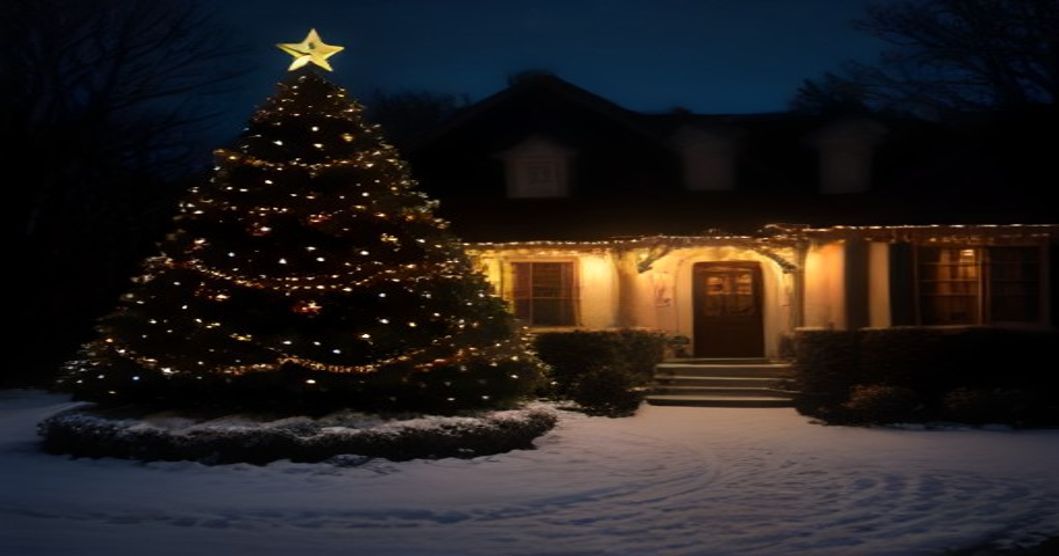
When you admire the elegant red and green garlands draping your neighbor's porch railings or notice the perfectly placed velvet bows adorning wreaths throughout your New Jersey neighborhood, you're witnessing traditions that traveled across the Atlantic Ocean over 150 years ago. The Victorian era didn't just give America industrialization and progress — it fundamentally transformed how we celebrate Christmas, establishing decorating customs that still illuminate our homes today.
Before Queen Victoria's reign, American Christmas celebrations were modest affairs, often viewed with suspicion by Puritan-influenced communities. But by the 1870s, elaborate home decorations had become the hallmark of proper American holiday celebration, thanks to Victorian influence and the Industrial Revolution's mass production capabilities.
Prince Albert's Revolutionary Christmas Tree
The transformation began with a single illustration in 1848. When the Illustrated London News published an image of Queen Victoria, Prince Albert, and their children gathered around a decorated Christmas tree, American society took notice. Prince Albert, originally from Germany, had brought his homeland's tradition of decorated evergreen trees into the British royal household.
Within a decade, American families across the Northeast — including those in New Jersey's growing communities — adopted this royal custom. The Christmas tree became the centerpiece of Victorian American holiday decorating, but it required elaborate ornamentation to match the era's taste for excess and beauty.
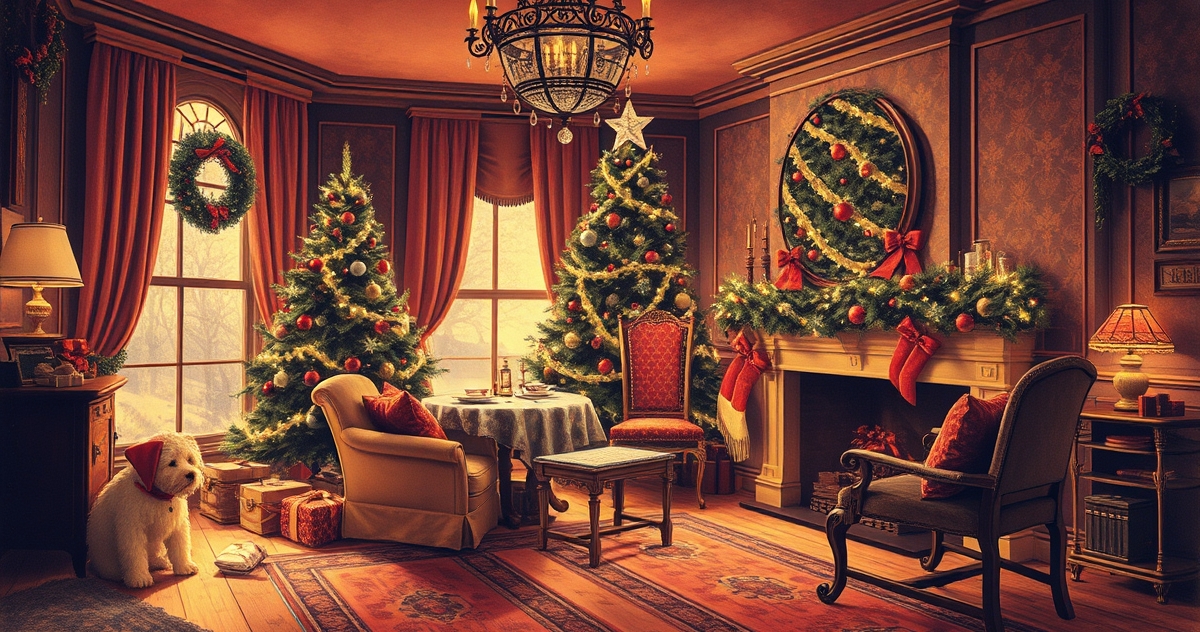
Victorian trees weren't simply decorated; they were architectural marvels. Families strung intricate garlands made from cranberries, popcorn, and paper chains. They added delicate glass ornaments, candles in tin holders, small toys, and sweets wrapped in colored paper. The tree's branches often groaned under the weight of elaborate decorations, each element carefully placed to create visual harmony.
The Industrial Revolution and Mass-Produced Ornaments
What made Victorian Christmas decorating possible for middle-class American families was the Industrial Revolution's mass production capabilities. Before the 1860s, Christmas ornaments were handmade luxury items available only to the wealthy. German glassblowers in Lauscha had been creating delicate Christmas ornaments since the 1840s, but importing them remained expensive.
Everything changed when F.W. Woolworth began importing German glass ornaments for his five-and-dime stores in the 1880s. Suddenly, families in New Jersey communities like Newark, Trenton, and Camden could afford the same delicate glass balls, intricate icicles, and whimsical figures that once graced only the wealthiest homes.
American manufacturers quickly joined the market. By the 1890s, companies like Corning Glass Works in New York were producing affordable Christmas ornaments for the growing American market. This accessibility democratized Victorian decorating styles, allowing families throughout New Jersey to embrace elaborate Christmas displays.
The mass production revolution extended beyond ornaments to include garlands, artificial flowers, and decorative bows. Factories could now produce the red velvet and green satin bows that became signature Victorian decorating elements, making them affordable for families who previously could only dream of such luxury.
Victorian Home Decorating Philosophy
Victorian Christmas decorating reflected the era's broader design philosophy: more was always better. Victorian families didn't simply trim a tree; they transformed their entire homes into holiday wonderlands. This comprehensive approach to seasonal decorating established patterns that modern New Jersey homeowners still follow today.
The Victorian mantel became a focal point of holiday decoration. Families draped elaborate garlands along mantelpieces, often incorporating fresh greenery like pine, cedar, and holly. These garlands were enhanced with red and green ribbons, creating the classic Christmas color combination that remains popular in contemporary professional garland styling.
Windows received equal attention. Victorian families hung wreaths in windows, placed candles on windowsills, and draped garlands around window frames. This practice of window decoration created the indoor-outdoor visual connection that modern lighting professionals still emphasize in residential lighting design.
Doorways became grand entrances during the Victorian Christmas season. Front doors were adorned with oversized wreaths, often measuring three feet in diameter or larger. These wreaths incorporated fresh greenery, elaborate bows, and sometimes small ornaments or fruits, establishing the foundation for today's door decoration traditions.
The Evolution of Color Traditions
While we associate red and green with Christmas today, these weren't always the dominant holiday colors. Early American Christmas celebrations often featured more subdued colors — whites, golds, and silvers. The Victorian era established red and green as the quintessential Christmas palette, and this choice wasn't accidental.
Red represented the blood of Christ and the warmth of hearth and home during winter. Green symbolized eternal life and the hope of spring's return. Victorian families embraced these symbolic meanings, incorporating red and green elements throughout their holiday decorating schemes.
The psychological impact of these colors proved powerful. Red creates excitement and draws attention, while green provides balance and harmony. Victorian decorators intuitively understood what modern color psychology confirms about the emotional impact of holiday colors.
Victorian bows became essential elements in this color story. Red velvet bows added luxury and warmth to evergreen arrangements, while green satin bows provided elegant contrast against red backgrounds. These bow techniques established patterns that professional decorators still use in contemporary custom holiday design.
From Candlelight to Electric Illumination
Victorian Christmas trees began with candles clipped to branches — a beautiful but dangerous tradition. Families kept buckets of water nearby and watched their trees carefully during the brief periods when candles were lit. This limited illumination to special occasions and short time periods.
Thomas Edison's incandescent light bulb, perfected in 1879, eventually revolutionized Christmas decorating. By 1882, Edward Johnson, Edison's business partner, created the first electrically illuminated Christmas tree using hand-wired red, white, and blue light bulbs. The era of electric Christmas lighting had begun.
However, early electric Christmas lights remained expensive luxury items. A single string of lights could cost $300 in today's dollars, making them accessible only to wealthy families. It wasn't until the early 1900s that mass production made electric Christmas lights affordable for middle-class American families.
This transition from candlelight to electric illumination transformed Christmas decorating from a brief, dangerous ritual into an extended celebration. Families could now light their trees and decorations for hours each evening throughout the holiday season, establishing the foundation for today's extensive exterior lighting displays.
Victorian Influence on Modern New Jersey Christmas Traditions
Walk through any New Jersey neighborhood during the holiday season, and you'll witness Victorian decorating principles in action. The comprehensive approach to holiday decorating — trees, garlands, wreaths, and bows working together to create cohesive displays — traces directly back to Victorian design philosophy.
Modern professional installers still follow Victorian color principles, often recommending red and green combinations for clients seeking traditional Christmas displays. The Victorian emphasis on garland placement along rooflines, doorways, and windows continues in contemporary exterior decorating projects throughout communities from Princeton to Cape May.
Even the scale of modern Christmas decorating reflects Victorian influence. The Victorian preference for abundance over restraint encouraged the elaborate exterior displays that define American Christmas celebrations today. New Jersey homeowners who cover every shrub with lights and outline every architectural feature continue this Victorian tradition of comprehensive seasonal transformation.
The Victorian innovation of incorporating natural materials — fresh greenery, pinecones, berries — with manufactured decorations established the foundation for today's mixed-media approach to holiday decorating. Professional decorators still combine fresh garlands with artificial elements, LED lights with natural materials, creating the layered richness that Victorian families pioneered.
Frequently Asked Questions
When did Americans first start decorating Christmas trees?
Americans began adopting Christmas tree traditions in the 1840s and 1850s, largely influenced by Queen Victoria and Prince Albert's publicized celebrations. The tradition became widespread across American communities, including New Jersey, by the 1870s when mass-produced ornaments made decorating more affordable.
Why are red and green considered traditional Christmas colors?
Red and green became dominant Christmas colors during the Victorian era. Red symbolized the blood of Christ and warmth of home, while green represented eternal life and hope. Victorian families incorporated these colors into garlands, bows, and ornaments, establishing a tradition that continues in modern holiday decorating.
How did mass production change Victorian Christmas decorating?
Mass production revolutionized Christmas decorating by making ornaments, garlands, and decorative elements affordable for middle-class families. Companies like F.W. Woolworth imported German glass ornaments, while American manufacturers produced domestic alternatives, democratizing elaborate Victorian decorating styles across communities.
What Victorian Christmas traditions do we still follow today?
Modern Christmas celebrations retain many Victorian elements: comprehensive home decorating, Christmas trees as focal points, garlands on mantels and doorways, elaborate door wreaths, red and green color schemes, and the integration of natural materials with manufactured decorations.
How did electric lights change Christmas decorating?
Electric lights, introduced in the 1880s, transformed Christmas from a brief candlelit celebration into an extended illuminated season. This change enabled the elaborate exterior lighting displays common today and made continuous holiday illumination safe and practical for American families.
The Victorian influence on American Christmas decorating created traditions that continue to define our holiday celebrations. From the first Christmas trees in 1840s American parlors to today's elaborate exterior displays lighting up New Jersey neighborhoods, we're continuing a decorating legacy that began with Queen Victoria's family portrait. Whether you're planning traditional garland installations or incorporating modern LED technology, you're participating in a decorating tradition that spans generations — and professional installation services can help you honor that heritage while creating stunning contemporary displays that would make any Victorian family proud.